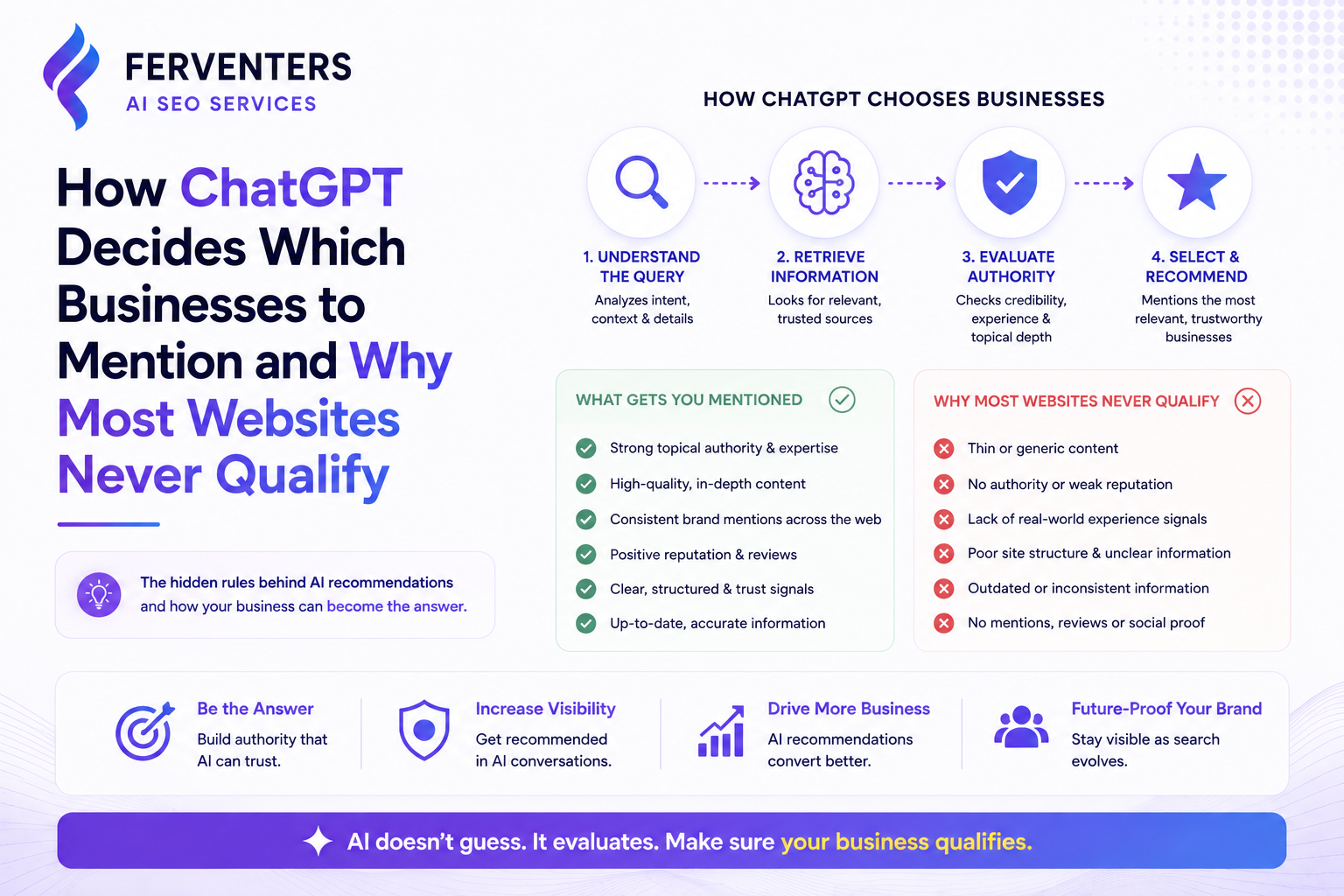
Several overlapping signals help AI systems decide whether a business is worth recommending.
● High-quality content that answers real questions in depth, rather than thin pages built only to target keywords
● Demonstrated expertise, shown through author credentials, case studies, or original insights
● Structured data and schema, which help machines understand what a page is actually about
● Brand authority, built through mentions in respected publications and consistent recognition across the web
● A consistent digital presence, where information matches across the website, directories, and third-party sources
Each signal adds a small amount of confidence. A business with strong content but no structured data may still be understood, but less precisely, while a business with schema but thin content will struggle to demonstrate real expertise. This is where AI search optimization becomes relevant, connecting technical elements like schema with substantive ones like AI visibility and entity SEO. A software company that publishes detailed guides and receives consistent mentions across review sites is applying semantic SEO whether or not it uses that exact term.